
The agency had received Rs 946.51 crore to manage its affairs in the Budget Estimates for 2023-24, which was later increased to Rs 968.86 crore in the Revised Estimates.

K V Kamath to take charge of BRICS Bank in July.

As India's stock rises, the resolution of the border row may become even more difficult, warn Harsh V Pant and Kalpit Mankikar.

The point made by sociologist M N Srinivas, that it represented a Sanskritic act that was linked to caste, is never raised in Indian debates and the disapproval of drink is almost universal, notes Aakar Patel.

The Reserve Bank of India on Monday directed all banks and financial institutions to provide information and documents sought by the Special Investigation Team (SIT) set up to unearth black money.

India spends significantly less on defence than could be expected from a country that faces simultaneous armed threats from two hostile neighbours -- China and Pakistan.

'Not even a single rupee from the electoral bonds should be allowed to be used in the election.' 'If it is used in the election, it will taint India's electoral process itself.'

Notwithstanding concerns about lofty valuations, smallcaps recorded their most significant monthly gain in nearly three years in November. The National Stock Exchange Nifty Smallcap 100 finished the month with a 12 per cent gain, the most since February 2021 when it rose by 12.2 per cent. After declining by 4.1 per cent in the preceding month, the Nifty Midcap 100 rose by 10.4 per cent, the most since July 2022.

Of the total 53,334 cases of frauds reported during 2008-09 and 2018-19 fiscal years, involving a whopping Rs 2.05 lakh crore, a highest of 6,811 cases were reported by the ICICI Bank.
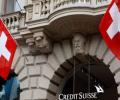
With the Swiss government showing eagerness to help India trace suspected black money hoarders, banks based in Switzerland appear to be losing traction among the wealthy Indian clients and could not get much business commitments during the just-ended WEF summit.

'Modi wants to reverse everything Nehru did, but is shy of touching his daughter's most unwise policies.' 'There is no example of this more stark than bank nationalisation,' says Shekhar Gupta.

The government may soon give the green light to bilateral trade between Russia and India in their national currencies to avoid any trade disruptions, multiple people aware of the matter said. While the Department of Commerce has recommended the proposal, an announcement is likely to be made by the finance ministry after further deliberations between the Department of Economic Affairs and Department of Financial Services. "The finance ministry will take a call on how to peg the two currencies," a senior government official told Business Standard. In the past, the two nations have had rupee-rouble trade, and when such an arrangement is implemented again, it will bypass the sanctions imposed on Russia by the West.

The government also appointed Dr Vinod Paul, a pediatrician at the AIIMS, as a member of the NITI Aayog
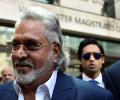
'The Insolvency and Bankruptcy Code is neither beneficial to banks nor helpful for the borrower.' 'Genuine people who are caught in economic stagnation will lose everything and thousands will lose jobs.'
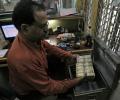
The cumulative loss of 20 state-run lenders stood at Rs 14,000 crore during Q4

Accelerating inequality, the market dominance of tech platforms and remote working are likely to be the longest-lasting legacies of the COVID-19 crisis, the WEF said in a report on Monday. Releasing its Chief Economists Outlook report during the online Davos Agenda Summit, the WEF said that beyond managing the pandemic and vaccine rollout, these trends could shape a new era of fiscal, monetary, and competition policy. Deglobalisation is seen as the least likely of the current trends to continue in the longer term; particularly as international coordination is key to resolving global challenges such as vaccine manufacturing and distribution.

The National Stock Exchange (NSE) Nifty Next 50 Index could undergo large-scale changes if the proposed tweaks to its computation methodology get implemented. In a discussion paper floated recently, NSE Indices, which owns and manages a portfolio of over 350 indices under the Nifty brand, proposed that only stocks that are traded in the futures and options (F&O) segment can be part of the index. Currently, as many as 11 non-F&O stocks are part of the Nifty Next 50 Index, which, as the name suggests, represents the next rung of large and liquid securities after the Nifty50.

A few state-owned banks such as IDBI Bank, Union Bank, Indian Overseas Bank have announced results for FY14.

'There is no scope for any doubt. This was a scheme designed to enrich the ruling party.'

The niche banks - small finance and payments banks -have been set up to further the regulator's objective of deepening financial inclusion.

Pawan Kumar Soni, a 55-year-old farmer based in Sri Ganganagar City in Rajasthan, became a victim of a cyber fraud when his 26-year-old son Harsh Vardhan opened a link from a phishing message that flashed on his mobile phone.

Experts say the recent Rs 14,000-crore PNB fraud could have been avoided had there been an integration of PNB's CBS with its SWIFT system

World Bank report on Thursday called for initiatives at the policy and institutional level to tap the economic potential it offers.

While the total disbursement of housing loans by PSBs as well as HFCs witnessed a deceleration in 2016-17, there was significant growth for the lower slabs

The loss of income has severely dented the loan repayment ability of small borrowers

'NSE has thousands of employees. It is their institution. So it's a dear family.' 'One should not hurt the morale of these people.'

China's intended role for AIIB is not so different from the existing Western lenders like the World Bank.

We asked colleagues, present and past, to reflect on a man who has made such a difference to their lives and careers. Here it is then, a rich collection of memories that offer enchanting glimpses of the enigmatic Ajit Balakrishnan.
The government has asked the Indian Banks' Association to make sure that IDBI Bank's wages are on a par with other banks.

India has a huge untapped population which doesn't have facilities for financial aid and insurance, and it is perhaps plausible to look at the option of having niche players catering to smaller sectors akin to non-banks and microfinance institutions in lending, said Rakesh Joshi, member (Finance & Investment), Insurance Regulatory and Development Authority of India (Irdai). Speaking at the Business Standard BFSI Insight Summit, Joshi said, "Today, most of our insurance companies operate at a national level. There is arguably a case for having differentiated operations, which cater to niche sectors the same way we have non-banking financial companies (NBFC) and microfinance institutions in lending." "The capital requirement for niche players may not be as large as those having national ambitions. "Enabling these niche players, which require lower capital, will enhance the penetration in areas which hitherto had not seen traction from large players," he said.

Borrowing from BRICS bank will help India avoid other kinds of politics emanating from the West. Overall, the BRICS institutions will necessarily adopt alternative ways of doing things based on their own cultural and socio economic needs, says M K Venu.

Regulators will need to allow the model to evolve to allow profits to flow, says Una Gulani.

Govt reconstitutes body, says will not interfere in senior PSB appointments
Voices from the Treasury are clamouring for lowering rates as this would boost demand.
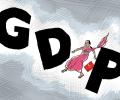
India's economy continues to be robust, but downside risks such as rising crude oil prices, adverse weather conditions, and the global banking crisis outweigh the upside potential in gross domestic product (GDP) growth in the current financial year (FY24), the finance ministry said on Tuesday in its Monthly Economic Review for March. "We reiterate that downside risks to our official forecast of 6.5 per cent for real GDP growth in FY24 dominate upside risks," the review said. "Opec's surprise production cut has seen oil prices rise in April, off their lows of low-seventies per barrel in March.
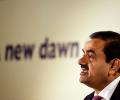
Adani Power, part of the Adani group, plans to add close to 6 gigawatts (Gw) of new power assets in the next five years, according to an investor presentation by the company. That is clearly meant to ride on India's burgeoning power demand. But there is another side to it: All of this new capacity is expected to be thermal power, or power produced from coal.

The Opposition on Monday charged the government with trying to promote crony capitalism, creating fear by giving "unbridled power" to taxmen, trying to snoop into people's lives through increased use of Aadhaar through the provisions of the Finance Bill.

Cases across the country against defaulters who owe over Rs 1 crore each, reveal CIBIL data.

The BRICS nations on Friday underlined the need for using local currencies in international trade and financial transactions besides committing themselves to supporting rule-based open and transparent global trade. A joint statement issued at the end of the meeting of the BRICS Ministers of Foreign Affairs and International Relations, also pressed for a robust Global Financial Safety Net with a quota-based and adequately resourced International Monetary Fund (IMF) at its centre. It further said the process of IMF governance reform under the 16th General Review of Quotas, including a new quota formula as a guide, should be completed by December 15, 2023.

Rumours in the bureaucracy on his successor include the names of Sajjid Chinoy of JP Morgan, Rathin Roy of the National Institute of Public Finance and Policy, Neelkanth Mishra of Credit Suisse and the principal economic advisor, Sanjeev Sanyal.
